RUMI

The mesmerizing life of Jalal-e-Din Rumi, the thirteen-century sage and poet, is a tale of a transformation by the power of Love, and indeed one of the greatest mysteries of life. It is as if to reveal the limitless domain of possibilities for change. It is the voice of hope echoing through the ages like a rippling wave getting ever stronger, acting like a divine doctor of souls promising the joy of recovery and healing to those who have lost the vision and the connection to their heart.
Having become a master in all the sciences of the time and acquiring the highest rank in the Shari’ia sciences, at the age of 24, Rumi inherited his father’s theological school in Konya. Established a reputation as an Islamic scholar and a teacher of the highest stature, it was considered a great honor to attend his classes; and as many as four hundred or more students participated in his formal classes.
In 1244 Rumi’s life was transformed through his encounter with Shams-e-Din Tabrizi. Shams struck a match setting the proud and sober teacher Rumi on fire. Rumi was both ripe and thirsty, enough to recognize Shams as an extraordinary being and his intervention as a sign pointing him towards Love and salvation. Much like Abraham, he welcomed the purifying blaze, the burning, the ash formation, and the everlasting afterglow of the renewed Rumi. The change was a complete annihilation-rebirth process, dying to the old self and rebirth to a new selfless being. Guided by his enlightened heart Rumi’s rich and fertile life, as a mystical guide and a teacher, started.
These two towering figures account for this event differently. Rumi says: “I was dead, got resurrected; I was cry, became laughter; Wealth of love came, and I became the everlasting Wealth”. Shams in his prayers asks: “Is there any of your distinguished ones who could carry my words? All my life I have been looking for a friend and a companion, someone I could connect with, no-one can fully absorb what I have to say”. In another discourse Shams says: “Since I was tired of myself, I looked for someone akin to make a ghebleh (focal point) out of him, so I could turn to him. Now that I have made him into a focal point, what I say he comprehends1.
The nature of this transformation points to one of the fundamental facts that later Rumi teaches in Mathnawi, time and time again, namely that love comes on its own accord and not by learning. The seeker should exert oneself to the utmost, scraping and scratching to become worthy of Love, and hope one day may be hunted down by the beloved. Rumi says; the source of the attraction is the beloved, he is calling you, otherwise, you would not feel the draw. He points out that, the two sides of the coin have to be together to make a whole. “If they that are thirsty seek water from the world, water to seeks in the world them that are thirsty” 2. Or, “ A loud call was coming: Come, O seeker! Bounty needs the beggar like a beggar.”3
After Shams, from 1249-50 to 1273, Rumi began disseminating his bestowed knowledge, through teaching and training others in esoteric knowledge. Hesam-e-din- Chalapi, one of Rumi’s disciples who had reached the level of a spiritual guide himself, requested Rumi to write a book of guidance on how to increase the chance of inviting joy and self-realization to one’s life, so all mankind would benefit from it. For the last twelve years of his life, Rumi worked on the six volumes of Mathnawi, his masterwork, and dedicated it to Hesam-e-din- Chalapi. In Mathnawi, Rumi guides seekers through the six of the seven domains or cities of “Love”, the path to self-realization and spiritual perfection, namely: “Love, Knowledge, Enrichment, Unity, Bewilderment and Not having and not being (annihilation)”. Yearning, the first domain, is the prerequisite to entering the path, and is assumed that seekers already feel the need and have the thirst for the quest otherwise would not be in search of the Truth.
Rumi’s teachings and path transcends all dogma, all hierarchy and all intellectual concepts. It is a direct way to the heart. His passionate poems and teachings advocate unlimited tolerance, positive reasoning, goodness, charity and awareness through love. His peaceful and tolerant teaching sit well with one’s soul and that’s why Rumi is one of the most popular poets in North America and has appealed to people of all walks of life.
1- Third Script, by Sahms-e-din Mohammad Tabrizi
2- Mathnawi, book 1, the story of the merchant and the captive parrot.
3- Mathnawi, book 1, the story of the Caliph and the Bedouin woman and her husband
” A teacher affects eternity; he can never tell where his influence stops”
By: Henry Adams
Dr. Parviz Sahabi

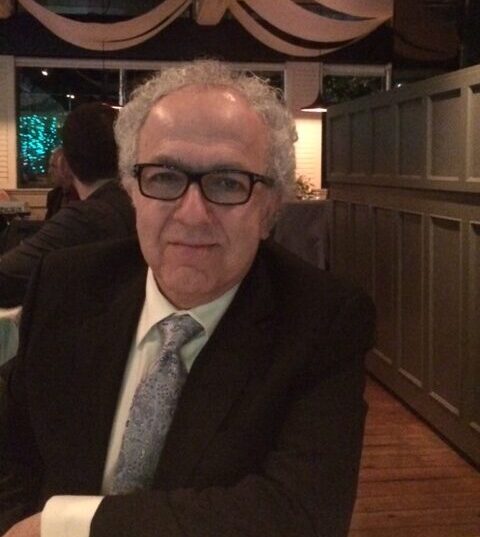
Dr. Parviz Sahabi (May 22, 1942 – October 17, 2022) was a scholar, an artist, and a renowned Mathnawai teacher. With more than forty years of experience, as an acknowledged authority, he offered an original systematic framework to study Rumi’s multifaceted masterpiece, the Mathnawi. Zavieh Mystical Study Center was Dr. Sahabi’s vision and under his direction, this non-profit organization was established by his students in 2004. A master teacher, Dr. Sahabi dedicated his life to disseminating knowledge and betterment of his students.