

About Zavieh
Zavieh Mystical Study Center is the late Dr. Parviz Sahabi’s vision of a space where people interested in mysticism and the path to perfection can get together, learn, and practice cultivating love and understanding. Zavieh was formed in 2004, with Dr. Sahabi’s encouragement, and joined efforts of a number of his students for gathering of people interested in mysticism.
Our Story
Zavieh is a non-profit organization that welcomes people from diverse backgrounds. It strives towards creating a space for friends to practice giving back and becoming a better version of themselves. Specifically, Zavieh aims to foster a safe environment for studying mysticism, exercising kindness, and cultivating the concept of “WE”.
We are fellow travelers on the path of awareness and improvement. On this journey, we seek and appreciate the essence of beauty in the universe and strive to become connected to its source. We believe in transformation and through our interactions, we hope to grow together. The Zavieh community is a dynamic entity reflected by its participants as they are given the opportunity to learn, practice and evolve to be of service to others.
Dr. Parviz Sahabi

Dr. Parviz Sahabi (May 22, 1942 – October 17, 2022) was a scholar, an artist, and a renowned Mathnawai teacher. With more than forty years of experience, as an acknowledged authority, he offered an original systematic framework to study Rumi’s multifaceted masterpiece, the Mathnawi. Zavieh Mystical Study Center was Dr. Sahabi’s vision and under his direction, this non-profit organization was established by his students in 2004. A master teacher, Dr. Sahabi dedicated his life to disseminating knowledge and betterment of his students.
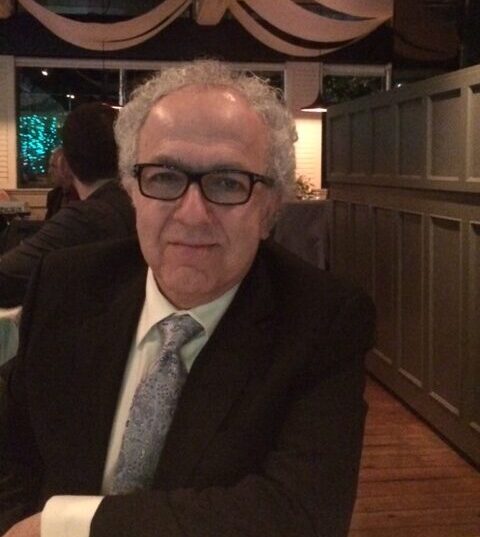
Mr. Mehdi Yousef-Zadeh
Mehdi Yousef-Zadeh has embarked on the path of mystical studies starting as a student of Dr. Parviz Sahabi in Molana Rumi’s Mathnawi classes in Vancouver, Canada, since 1991.
In 1996, Dr. Sahabi instructed “Agha Mehdi”* to take on the role of organizer and moderator of the Mathnawi tutorial sessions.
In 2017, upon Dr. Sahbi’s direction, “Agha Mehdi” began facilitating and leading the newly structured Mathnawi sessions at Zavieh.
*As a sign of respect and endearment, we are keeping how the late Dr. Sahabi used to call Mr. Mehdi Youself-Zadeh

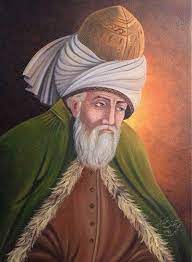
Rumi
The mesmerizing life of Jalal-e-Din Rumi , the thirteen-century sage and poet, is a tale of a transformation by the power of Love, and indeed one of the greatest mysteries of life. It is as if to reveal the limitless domain of possibilities for change. It is the voice of hope echoing through ages like a rippling wave getting ever stronger, acting like a divine doctor of souls promising the joy of recovery and healing to those who have lost the vision and the connection to their heart.
Activities of Zavieh
Sessions of studying Rumi’s masterpiece, the Mathnawi
Cultural celebrations
Community support
Arts (poetry, music, art exhibitions, etc)
Research projects related to mysticism
Next-generation focused activities
Literal Meaning of Zavieh
This text has been translated from the Dehkhoda Encyclopedic Dictionary of Persian Language on the definition of the word “Zavieh”.
- Corner
- Pillar; (main) element- the main element of the house
- Cave; Cavern
- Eye’s corner
- House; home; room; dwelling; abode; place; locality
- Nest
- Booth; chamber; cell; room
- Private place; not crowded; a place of solitude; a place in a monastery or a convent where one can retire and meditate
- Small room at home used for prayer; an altar; special place to recite holy Quran
- Where the sheikh sits in Khanehghah, or the monastery
- Monk’s cell; monastery
- Inn; caravanserai; similar to Khanehghah, where Sufis stay while traveling,; a place to house scholars, poor and homeless
- A place run by a sheikh and a keeper, where poor and homeless come to get free food and a place to stay.
- “Middle Ages Islamic terminology”; an extensive nonprofit establishment that teaches all the recognized sciences, houses children and low income students while nurturing and training them, receives and provides food and shelter for travelers passing through.
- First time used in Greece as a priest’s domain or cell. Later when monastery life found its way into the life of Muslims, the closest to the original meaning was preserved.
- Establishing Zavieh and caravanserai has its base in the Prophet Mohammad’s tradition, who had allocated part of his mosque to be used as the living quarters for his poor and homeless followers.
- Rubat which is called Takeeh in Turkish, Zavieh, and Khankah which is called the House of Sufis in Persian, or Khangah are used interchangeably.
- In Islamic terminology; is a center for the development of mind and acquisition of all current sciences and literature. In Africa especially in Algiers each Zavieh is named after an “intermediary king”, or a spiritual guide, and consists of:
- A mosque with the tomb of the intermediary spiritual guide that the place has been named after.
- A special place allocated for reciting holy Quran.
- A local school to educate children.
- A residence for the students and seekers who are studying to become teachers or judges.
- A place to receive and house the travelers and wandering dervishes.
- A place to receive and house the travelers and wandering dervishes.
- Some also have tombs of pious men or teachers who had wished to be berried next to the intermediary spiritual guide.
- Establishing these centers, “Zaviehs”, was one of the most valuable social services imaginable and a sign of highest level of civilization and humanity. Because not only it elevated the standard of education among all ranks in the society, but also alleviated poverty by providing the most essential needs of the underprivileged. As a result, not even one distressed or helpless beggar existed.*1
- In Geometry; a corner, formed when two lines meet or cross each other. An angle.
- Clothing; traveling– sack; prayer-mat and sleeping gear that dervishes carry with themselves all the time.
- An instrument for determining and testing right angles, a set-square.
- An angle of contact (physics); the angle made by the meniscus of a liquid with the solid surface which cuts it.
- Angle of deviation (optics); the angle between the incident and emergent rays when light passes through a prism or any other optical system.
- Angle of elevation; the angle made by an ascending line with the horizontal.
- Angle of incidence (physics); the angle between the direction of a moving body or light ray and the normal drawn at the point of incidence on a surface.
- Angle of reflection (physics); the angle between the direction of a moving body or light ray after reflection from a surface and the normal to the surface at the point of incidence.
- Angle of refraction (physics); the angle between a refracted ray and the normal to the interface at the point where refraction occurs.
*1) “Daeratolmaref Islami”.
What Does Zavieh Mean To Its Friends?
The Zavieh is a meeting point, within the boundless universe of time and space, where WE meet with the hope of becoming acquainted with the exceptional placeless, timeless feeling called "LOVE".
Mehdi Yousef-zadeh
I am myself a zavieh. I can choose to remain in my corner and gravitate towards the self, or extend my arms outward as far as possible. The Zavieh teaches me how to clean my own dwelling, let go of immersion in the self and concentrate on opening my heart and arms as wide and as far as my potential allows.
Golnar Riahi
The Zavieh is my family, my home and my safest place in the world. In the Zavieh where diverse views meet, I practice communication without judging and being judged.
Naghmeh Farahani
From a corner in Zavieh, a master teacher gives voice to his teachings and initiates a tide of change, a tide that moves outward through his students, their families, into the community, city, country, continent and beyond.
Golnar Riahi
The Zavieh is a safe corner to practice love and selflessness without the fear of being judged.
Negar Modaresi
The Zavieh is a place to open up our hearts to each other. It is a place to change, a place of change and a place that allows our most beautiful feelings to come out.
Hooman Koohbor